Minutes of Meeting Sample: Free Editable Templates for Board & Project Meetings

Meetings can either drive an agency forward or drain its most valuable resource: time. The difference often lies in what happens after everyone leaves the room. Effective meeting minutes are not just a historical record; they are a blueprint for action, a tool for accountability, and a critical safeguard against the costly drift of miscommunication. Without a solid structure for capturing key details, you risk important decisions being forgotten, crucial tasks falling through the cracks, and hard-won team alignment dissolving into confusion.
This is where a well-crafted minutes of meeting sample becomes indispensable. It provides a proven framework that moves beyond simple note-taking and transforms an administrative task into a powerful operational advantage. A great template ensures consistency, clarifies ownership, and creates a clear path forward that everyone can follow. It is the connective tissue between discussion and execution.
This guide provides seven distinct, battle-tested minutes of meeting sample templates, each meticulously designed for a specific agency scenario, from high-stakes board meetings to agile team stand-ups. For each example, we will dissect its strategic purpose, provide an editable template, and offer actionable tips to keep your projects, clients, and internal teams perfectly in sync. Let’s move from aimless transcription to strategic documentation.
1. Corporate Board Meeting Minutes Template
Corporate board meeting minutes are more than just notes; they are a formal, legal record of the board of directors' decisions, discussions, and actions. This type of minutes of meeting sample is the most rigorous and structured, designed to ensure governance compliance, protect the organization from liability, and provide a clear historical account for shareholders, auditors, and regulatory bodies. Its primary purpose is to document what was decided, not a verbatim transcript of how it was discussed.
This template is essential for maintaining an official corporate record. It meticulously documents motions made, seconds, voting outcomes (including abstentions and recusals), and formal resolutions. Unlike informal meeting notes, these minutes are a legally binding document that can be used in court, making accuracy and precision paramount.
Strategic Breakdown and Analysis
The strength of a formal board meeting minutes template lies in its structure and unwavering focus on legal and regulatory standards. It prioritizes clarity and defensibility over detailed conversational notes.
- Legal Defensibility: The format is designed to stand up to legal scrutiny. By recording who was present, when the meeting was called to order, and the precise wording of resolutions and votes, the organization creates an unimpeachable record of its decision-making process.
- Governance and Compliance: For non-profits and public companies, these minutes are proof of adherence to bylaws and regulatory requirements. They demonstrate that the board is fulfilling its fiduciary duties, a critical component of maintaining good standing with entities like the IRS or SEC.
- Historical Continuity: Board members change, but the organization's legal obligations persist. A consistent and well-archived set of minutes provides a reliable history, enabling new directors to understand past decisions and strategic rationale.
Actionable Takeaways and Best Practices
To effectively implement a corporate board meeting minutes template, follow these agency-focused best practices:
- Appoint a Corporate Secretary or Scribe: The role of the minute-taker should be a formal, designated position. This individual should be skilled in capturing motions and resolutions accurately without getting lost in conversational details.
- Use a Standardized Template: Don't reinvent the wheel for each meeting. Adopt a formal template that includes mandatory fields: meeting title, date, time, location, attendees, absentees, call to order time, approval of previous minutes, reports, motions made, voting records, and adjournment time.
- Draft and Distribute Promptly: Circulate a draft of the minutes to all board members within 48-72 hours while the details are still fresh. This allows for timely review, corrections, and eventual formal approval at the next scheduled meeting.
- Secure Archiving: Store signed and approved minutes in a secure, centralized, and unalterable format (e.g., a read-only digital archive or a physical minute book). This is crucial for audits and legal discovery.
By adopting this formal approach, your agency or organization ensures its most critical decisions are documented with the precision and authority they demand.
2. Project Management Status Meeting Minutes
Unlike the formal legal record of a board meeting, project management status meeting minutes are a dynamic tool for operational control and team alignment. This type of minutes of meeting sample is designed for action, clarity, and momentum. Its primary purpose is to capture project progress, identify and resolve blockers, and assign clear ownership to next steps, ensuring the entire team remains synchronized and focused on hitting key milestones.
This template serves as a real-time health check for a project. It prioritizes information like task status updates, risk assessments, and resource allocation issues. Whether used in software development sprint reviews or for tracking marketing campaign progress, these minutes provide a concise summary that keeps stakeholders informed and holds team members accountable for their commitments.
Strategic Breakdown and Analysis
The power of a project status meeting minutes template comes from its focus on forward motion and problem-solving rather than historical record-keeping. It is a tactical document designed to drive project success.
- Proactive Blocker Identification: The format is structured to surface problems quickly. By dedicating sections to risks, issues, and blockers, the team is forced to confront obstacles head-on before they derail the project timeline or budget.
- Enhanced Team Accountability: Every action item is assigned a clear owner and a due date. This creates a culture of accountability where responsibilities are transparent, making it easy to track who is responsible for what and by when.
- Stakeholder Alignment: These minutes provide a concise, easily digestible summary for stakeholders who are not involved in the day-to-day work. A well-crafted summary keeps leadership informed of progress and potential risks without overwhelming them with technical details.
Actionable Takeaways and Best Practices
To effectively implement a project management status meeting minutes template, follow these agency-focused best practices:
- Integrate with Project Management Tools: Don't let minutes live in a vacuum. Link action items directly to tasks in your project management software (like Jira, Asana, or Trello). This creates a single source of truth and automates tracking.
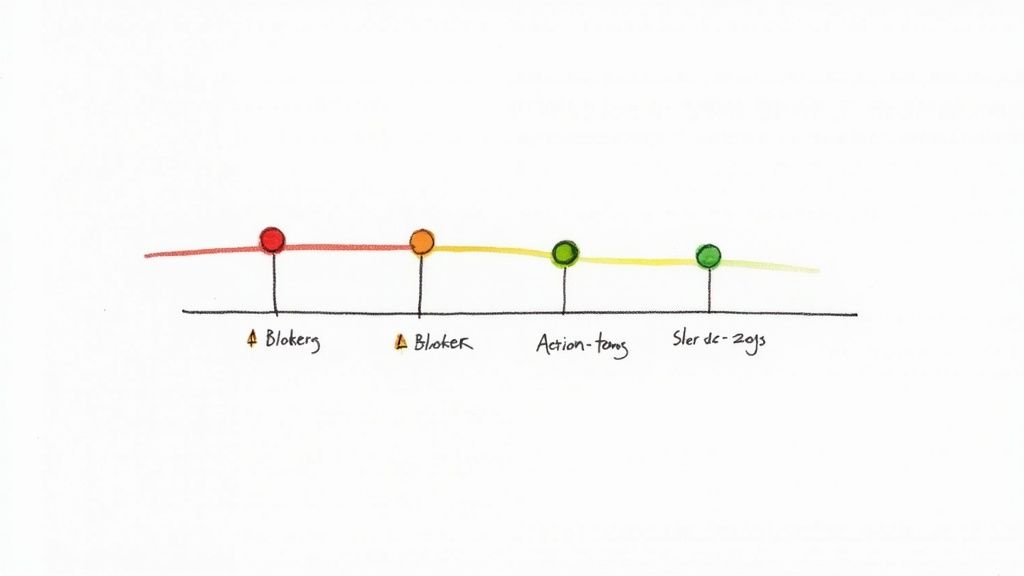
- Use a Visual Status System: Implement a simple "traffic light" system (Red, Yellow, Green) for major project components. This allows anyone reading the minutes to assess the project's overall health in seconds.
- Focus on Decisions and Actions, Not Discussion: The goal is not to transcribe the conversation. Document the key decision made, the action item that resulted, the owner of that action, and the deadline. Keep it brief and to the point.
- Distribute Immediately: Share the draft minutes before the meeting ends or immediately after. This allows for real-time corrections and ensures everyone leaves with a clear, unified understanding of their responsibilities.
By adopting this action-oriented approach, your agency can transform status meetings from simple check-ins into powerful drivers of project completion.
3. Sales Team Meeting Minutes Template
Sales team meeting minutes are designed for speed, accountability, and action. Unlike the formal, governance-focused records of a board meeting, this minutes of meeting sample is a dynamic tool focused on performance metrics, pipeline health, and revenue-generating activities. Its primary purpose is to create a weekly snapshot of progress against quotas, identify obstacles, share competitive intelligence, and align the team on immediate next steps.
This template is crucial for maintaining momentum and transparency in a high-pressure sales environment. It translates conversations about wins, losses, and pipeline movement into a structured record that tracks individual and team performance over time. This ensures that key insights, such as successful closing tactics or common client objections, are captured and shared for collective learning and improvement.
Strategic Breakdown and Analysis
The power of a sales meeting minutes template lies in its direct connection to revenue-driving metrics and its ability to foster a culture of accountability and continuous improvement. It is a management tool as much as it is a record-keeping document.
- Performance Accountability: By systematically documenting individual commitments, pipeline updates, and progress toward quotas, the minutes create a clear and public record of accountability. This structure helps managers track performance without micromanaging and allows reps to own their results.
- Action-Oriented Focus: The template is inherently forward-looking. Instead of just recording discussions, it emphasizes documenting specific action items, owners, and deadlines. This transforms the meeting from a simple status update into a strategic planning session for the week ahead.
- Knowledge Sharing and Team Learning: Sales is often a siloed activity. These minutes break down those silos by formally capturing what's working and what isn't. Documenting common objections, competitor tactics, and successful pitches creates a valuable, searchable knowledge base for the entire team.
Actionable Takeaways and Best Practices
To effectively implement a sales team meeting minutes template, focus on efficiency, data integration, and motivation:
- Integrate with Your CRM: Manually entering pipeline data is a waste of a salesperson's time. Use a template that integrates with your CRM (like Salesforce or HubSpot) to automatically pull in key metrics like deals created, pipeline value, and close rates. This keeps the meeting data-driven and accurate.
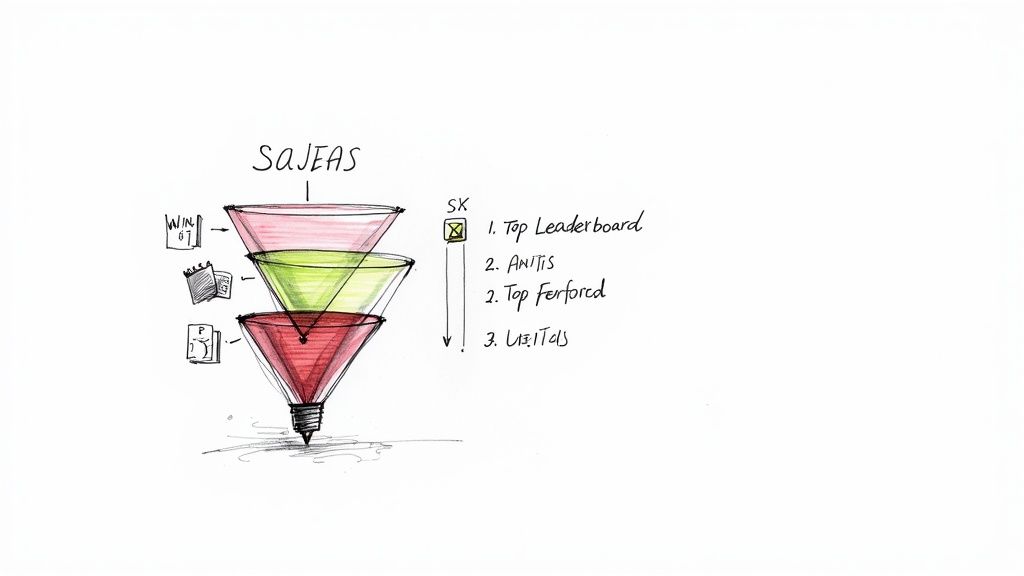
- Standardize the Agenda and Template: A consistent structure is key. A standardized template should include: review of previous action items, celebration of wins, pipeline review (by individual or stage), discussion of blockers/challenges, competitive intelligence sharing, and new action items. This makes the meeting predictable and efficient.
- Celebrate Wins Explicitly: Start every meeting by celebrating recent successes noted in the minutes. Documenting and publicly acknowledging closed deals, major milestones, or positive client feedback is critical for maintaining team morale and motivation.
- Keep it Brief and Focused: Sales team huddles should be high-energy and concise, ideally under 30 minutes. The minutes template should reflect this by using bullet points and focusing only on the most critical data points and actions, avoiding long narratives.
4. Committee or Departmental Meeting Minutes Template
Committee or departmental meeting minutes serve as the operational backbone for internal team coordination and decision-making. This type of minutes of meeting sample is less rigid than a formal board record but more structured than casual notes, striking a crucial balance between detailed documentation and actionable communication. It is designed to capture key discussions, decisions, and action items that drive a department’s progress, from HR policy updates to marketing campaign strategies.
This template is vital for ensuring alignment and accountability within a specific functional area. It documents departmental initiatives, tracks progress on ongoing projects, and provides a clear record of decisions made at the team level. Unlike high-level board minutes, its primary audience is the team itself, making clarity on next steps and ownership its most important function.
Strategic Breakdown and Analysis
The power of a departmental meeting minutes template is its adaptability and focus on operational execution. It translates strategic goals into concrete tasks and ensures every team member understands their role in achieving them.
- Enhanced Team Alignment: By documenting discussions and decisions, these minutes create a single source of truth. This reduces misunderstandings and ensures everyone, including those absent, is on the same page regarding priorities, timelines, and departmental policies.
- Accountability and Action Tracking: The format’s emphasis on assigning specific action items with deadlines and owners is its greatest strength. It transforms conversations into a tangible work plan, making it easy for managers to follow up and for team members to track their responsibilities.
- Transparent Decision-Making: For processes like budget reviews or policy changes, these minutes provide a transparent record of the rationale behind decisions. This builds trust within the team and offers a reference point for future discussions or audits.
Actionable Takeaways and Best Practices
To effectively implement a committee or departmental meeting minutes template, focus on consistency and clarity to drive team performance:
- Assign a Rotating Scribe: To build shared responsibility and train team members in effective documentation, rotate the role of minute-taker. This prevents the task from becoming a burden on one person and gives everyone insight into the process.
- Customize the Template: Adapt a standard template to fit your department’s specific needs. A marketing team might include sections for campaign metrics, while an operations team might focus on production KPIs or safety incidents.
- Focus on Decisions and Actions: Train the scribe to capture the outcome of a discussion, not every comment. The goal is to record what was decided, who is responsible for the next step, and when it is due. This keeps the minutes concise and actionable.
- Distribute and Archive Promptly: Send the minutes to the entire team within 24 hours. Store them in a shared, easily accessible location like a team collaboration tool (e.g., Slack, Microsoft Teams, Asana) or a shared drive, so they serve as a living reference document.
By adopting this structured yet flexible approach, your department can improve its efficiency, foster accountability, and ensure that every meeting moves the team closer to its goals.
5. Client or Stakeholder Meeting Minutes Template
When meeting with external parties like clients, vendors, or key stakeholders, the minutes serve a dual purpose: they are both a record of agreements and a crucial relationship management tool. This type of minutes of meeting sample is crafted to promote transparency, build trust, and prevent misunderstandings by creating a shared source of truth. It focuses on clearly documenting decisions, expectations, and commitments made by all parties involved.
This template is vital for managing external relationships professionally. It moves beyond internal note-taking to become a formal document that confirms discussions, outlines deliverables, and sets clear timelines agreed upon during the meeting. For agencies and professional services firms, these minutes can serve as a reference point to protect against scope creep and ensure alignment on project goals.
Strategic Breakdown and Analysis
The power of a client-facing minutes template lies in its ability to blend formal documentation with clear, accessible communication. It prioritizes mutual understanding and accountability, ensuring both your organization and the external stakeholder are on the same page.
- Relationship Management: By documenting and sharing the minutes, you demonstrate professionalism and a commitment to transparency. Sending a draft for client review and approval shows that you value their input and are dedicated to accurate collaboration.
- Risk Mitigation: These minutes are a practical defense against future disputes. Clearly stated financial agreements, timelines, and action items provide a written record that can clarify misunderstandings before they escalate, protecting your agency from liability.
- Accountability and Alignment: This format ensures there is no ambiguity about who is responsible for what. By clearly assigning ownership and deadlines for next steps to both internal team members and client contacts, it keeps projects moving forward and holds everyone accountable.
Actionable Takeaways and Best Practices
To effectively use a client or stakeholder meeting minutes template, adopt these best practices focused on external communication:
- Send a Draft for Approval: Always circulate a draft of the minutes to the client or stakeholder for their review and confirmation before finalizing. This collaborative step builds trust and ensures the final document is a mutually agreed-upon record.
- Use Clear, Jargon-Free Language: Avoid internal acronyms or technical jargon that could confuse an external party. The goal is clarity and universal understanding, so write in plain, direct language that leaves no room for misinterpretation.
- Document All Commitments: Explicitly state any financial figures, resource commitments, or critical deadlines discussed. For major agreements, such as contract terms or project scope changes, consider requesting a client signature on the final minutes.
- Confirm Next Steps Verbally and in Writing: Before the meeting ends, verbally summarize the key action items and who owns them. Then, ensure this is precisely reflected in the written minutes to reinforce accountability and immediate next steps.
By implementing this template, your agency can transform meeting notes from a simple internal record into a powerful tool for building stronger client relationships and ensuring project success.
6. Executive Leadership Meeting Minutes Template
Executive leadership meeting minutes capture the highest level of strategic decision-making within an organization. Unlike other meeting records, this minutes of meeting sample is defined by its focus on strategic direction, enterprise-wide implications, and confidentiality. It is a tool for the C-suite to document pivotal decisions, align on organizational priorities, and assign top-level accountability, prioritizing outcomes over operational details.
This template is designed for brevity and impact, often mirroring an executive summary format. It avoids granular discussion points and instead concentrates on the final decisions, the strategic rationale behind them, and the cascading actions required to execute them across the business. Its purpose is to create a clear, high-level record for the leadership team, ensuring alignment and a unified message.
Strategic Breakdown and Analysis
The power of an executive leadership meeting minutes template comes from its strategic focus and its role in translating top-level vision into organizational action. It is less about legal compliance and more about effective governance and strategy execution.
- Strategic Alignment: The format forces clarity on major decisions and their impact. By documenting only the most critical outcomes, it ensures the entire leadership team leaves with the same understanding of priorities and next steps, preventing strategic drift.
- Confidentiality and Discretion: These meetings often involve sensitive information, from financial forecasts to potential mergers or personnel changes. The template is structured to record decisions without exposing sensitive deliberations, often including sections clearly marked as "Confidential" for limited distribution.
- Accountability and Execution: By focusing on high-level action items assigned to specific executives, the minutes become a primary tool for driving accountability. This ensures that strategic discussions translate directly into measurable progress across different departments.
Actionable Takeaways and Best Practices
To effectively use an executive leadership meeting minutes template, your agency's leadership should adopt these targeted best practices:
- Prioritize Decisions, Not Discussion: The minute-taker, often a chief of staff or executive assistant, must be trained to distill hours of discussion into a few key decision points. The goal is to capture the "what was decided," not "how it was debated."
- Use an Executive Summary Format: Strive to keep the minutes to a single page. Lead with a summary of key decisions and action items at the very top for quick reference. Use data and key metrics to support the recorded outcomes.
- Define a Communication Cascade Plan: For each major decision, the minutes should outline the communication plan. This includes defining who needs to be informed, what message will be delivered, and by whom, ensuring strategic information is cascaded thoughtfully throughout the organization.
- Secure and Control Distribution: These minutes are not for general consumption. Store them in a highly secure digital location with restricted access. The distribution list should be explicitly defined and limited to the executive team and, when necessary, their direct reports.
By implementing this strategic and disciplined approach, your agency can ensure its leadership meetings are not just talking shops but powerful engines for decisive action and unified execution.
7. Informal or Team Standup Meeting Minutes Template
Unlike their formal counterparts, informal or team standup meeting minutes are built for speed and immediate clarity. This type of minutes of meeting sample serves not as a legal record but as a real-time pulse check for agile teams, daily huddles, and quick syncs. Its purpose is to facilitate communication, identify obstacles, and align the team on immediate priorities without the burden of bureaucratic documentation.
This template is lightweight by design, often following a simple "What I did yesterday / What I'm doing today / What's blocking me" format popularized by Agile and Scrum methodologies. The focus is on capturing the essentials: progress, plans, and problems. It’s a functional tool used to keep a high-cadence project moving forward, making it indispensable for software development teams, creative agencies, and any group practicing lean principles.
Strategic Breakdown and Analysis
The power of an informal minutes template is its simplicity and its direct impact on team velocity and transparency. It strips away formality to promote a culture of open, rapid communication.
- Obstacle Identification: Its primary strategic function is to surface blockers early and often. By creating a dedicated space for team members to voice impediments, the template ensures that problems are identified and can be addressed by a manager or lead immediately after the standup, preventing small issues from derailing timelines.
- Enhanced Team Accountability: The round-robin format, where each person shares their updates, fosters a sense of individual ownership and peer accountability. Publicly stating daily goals creates a subtle but powerful commitment to achieving them, keeping the entire team aligned and motivated.
- Minimal Administrative Overhead: This approach respects the team's time by minimizing the effort required for documentation. The notes are brief, actionable, and often posted directly into a shared communication channel like Slack or Microsoft Teams, making them instantly accessible without needing formal approval.
Actionable Takeaways and Best Practices
To effectively use an informal standup meeting minutes template, focus on maintaining momentum and clarity:
- Adopt a "Blockers First" Mentality: Train the facilitator to capture blockers in a separate, highly visible list. These are the most critical outputs of the meeting and should be the first items addressed by leadership once the standup concludes.
- Use a Simple, Shared Format: Create a template directly within your team’s primary communication tool (e.g., a pinned post in a Slack channel, a Confluence page, or a simple text file). A common structure is: Done (What was completed), Doing (Today's focus), and Blocked (Impediments).
- Keep it Time-Boxed and Focused: Strictly enforce a 15-minute time limit for the standup itself. The meeting is for status updates, not for problem-solving. Defer deep discussions or "parking lot" items to a follow-up meeting with only the necessary participants.
- Rotate the Facilitator Role: To increase engagement and share responsibility, rotate the role of meeting facilitator or scribe. This practice gives everyone a stake in keeping the meeting efficient and ensures the process doesn't become overly dependent on one person.
By implementing this lean approach, your agency can foster a culture of transparency and proactive problem-solving, ensuring daily progress is not just made, but also seen.
7-Template Meeting Minutes Comparison
| Template | Implementation Complexity 🔄 | Resource Requirements ⚡ | Expected Outcomes ⭐ / 📊 | Ideal Use Cases 💡 | Key Advantages 📊 |
|---|---|---|---|---|---|
| Corporate Board Meeting Minutes Template | High — formal procedures, legal review required 🔄🔄🔄 | High — legal counsel, dedicated corporate secretary, time | ⭐⭐⭐ — legally defensible records; governance & shareholder accountability 📊 | Public company boards, nonprofit boards, investor relations | Legal protection; audit trail; compliance enforcement |
| Project Management Status Meeting Minutes | Medium — structured updates and milestone tracking 🔄🔄 | Medium — PM, tool integration (Jira/MSP), regular contributors ⚡ | ⭐⭐ — improved delivery predictability; early risk visibility 📊 | Sprints, construction projects, campaign or IT rollouts | Actionable tracking; clear ownership; risk management |
| Sales Team Meeting Minutes Template | Low–Medium — recurring, data-driven notes 🔄🔄 | Medium — CRM access, sales manager, timely data entry ⚡ | ⭐⭐ — enhanced pipeline visibility; faster market response 📊 | Weekly sales huddles, enterprise sales reviews, quota tracking | Pipeline transparency; coaching records; morale boost |
| Committee / Departmental Meeting Minutes | Medium — adaptable formats for departments 🔄🔄 | Medium — rotating minute-taker, department leads, templates ⚡ | ⭐⭐ — documented decisions; institutional memory; alignment 📊 | HR, Finance, Marketing, Operations, Safety committees | Flexibility across teams; decision traceability; onboarding aid |
| Client / Stakeholder Meeting Minutes | Medium–High — careful wording, approval workflows 🔄🔄🔄 | High — client review, possible legal/contract input, sign-offs ⚡ | ⭐⭐⭐ — clear commitments; reduced misunderstandings; legal reference 📊 | Client kickoffs, vendor negotiations, partnership meetings | Manages expectations; documents agreements; external professionalism |
| Executive Leadership Meeting Minutes | Medium — concise capture of strategic decisions 🔄🔄 | Medium — executive assistant, data summaries, confidentiality controls ⚡ | ⭐⭐⭐ — strategic alignment; rapid decision communication 📊 | C‑suite strategy sessions, QBRs, M&A discussions | Brevity and focus; enterprise impact clarity; confidentiality |
| Informal / Team Standup Meeting Minutes | Low — minimal structure, fast capture 🔄 | Low — team members, 15 minutes, lightweight notes ⚡⚡⚡ | ⭐ — daily sync; quick blocker resolution; low formal record 📊 | Daily standups, dev huddles, support team check-ins | Fast; very low overhead; keeps teams synchronized |
From Templates to Transformation: Automating Accountability in Your Agency
Moving beyond a blank page to a structured template is a monumental first step in refining your agency's meeting processes. Throughout this guide, we've explored a diverse collection of minutes of meeting sample formats, each tailored to specific contexts, from high-stakes board meetings to agile daily stand-ups. We’ve broken down not just what to include but why certain structures are more effective for different audiences and objectives.
The core lesson is that effective meeting minutes are far more than a simple record of conversation. They are strategic assets. A well-crafted document transforms abstract discussions into a concrete blueprint for action, assigning clear ownership and deadlines. It creates a single source of truth that aligns teams, informs stakeholders who weren't present, and provides a historical record for future reference and decision-making.
Key Insights: Beyond the Template
As we've analyzed each minutes of meeting sample, several critical themes have emerged that separate merely adequate notes from truly transformative ones:
- Context is King: The level of formality, detail, and structure must align with the meeting's purpose. A client-facing document requires a different tone and focus than an internal project retrospective.
- Action Over Abstraction: The most valuable minutes prioritize action items. Each task should be clearly articulated, assigned to a specific individual, and given a definitive due date. Without this, discussions remain just discussions.
- Clarity and Conciseness: Jargon, rambling sentences, and verbatim transcription obscure the essential takeaways. The goal is to distill the conversation into its most critical components: key decisions made, problems identified, and next steps agreed upon.
Putting It All into Practice: Your Actionable Next Steps
Mastering the art of meeting minutes is an iterative process. It's not about finding the one perfect template but about building a system that consistently drives accountability and progress within your agency. Here’s how to start implementing these concepts today:
- Select and Standardize: Choose two or three templates from our examples that best fit your most frequent meeting types (e.g., internal project status, client check-in). Adapt them to your agency’s branding and specific needs.
- Train Your Team: Don't assume everyone knows how to take effective minutes. Hold a brief training session to walk through the standardized templates, emphasizing the importance of capturing action items with clear ownership and deadlines.
- Integrate with Your Workflow: This is the most crucial step. Manually transferring action items from a document to a project management tool is a common point of failure. Identify a system to bridge this gap, ensuring that tasks discussed in a meeting immediately enter your team's workflow.
- Review and Refine: After a month, gather feedback from your team. Are the minutes clear? Are action items being completed? Is the process saving time or creating friction? Use this feedback to refine your templates and processes.
Ultimately, the goal is to create a seamless loop where meetings directly fuel execution. When every participant leaves a meeting confident about what was decided and what they are responsible for, you unlock a new level of operational efficiency and client trust. The humble minutes of meeting sample is your starting point on a journey toward a more organized, accountable, and successful agency.
Ready to close the gap between discussion and execution for good? The templates and samples provided are powerful, but true transformation happens when they connect directly to your project management workflow. RGK is an all-in-one agency OS that integrates meeting notes, tasks, and client communication, ensuring every action item is automatically tracked and managed. Stop letting great ideas get lost in static documents and see how RGK can turn your meetings into engines of progress.